
Week 5, Term 1 2026 Newsletter
Language
March 17th 2026
Language is a vast area of learning that grows alongside mobility. Although it starts off more subtly than movement, it develops just as quickly. Your children are like little sponges, absorbing all they hear.
We have talked a lot over the weeks about how it is us that has to learn. Our children are born ready to learn while we are often stuck in old habits or unaware of how we might best support our little ones.
Use real words for real objects
Eye to eye contact when possible and practise “serve and return” when talking to them. Your patience will be rewarded.
Be mindful of background noise when talking to them.
If you have a second language, always use your mouth tongue with your child. They are surrounded by English speaking people and that will come naturally.
“Say what you see”, remember when talking to your child give them language and be mindful of just saying “good ….
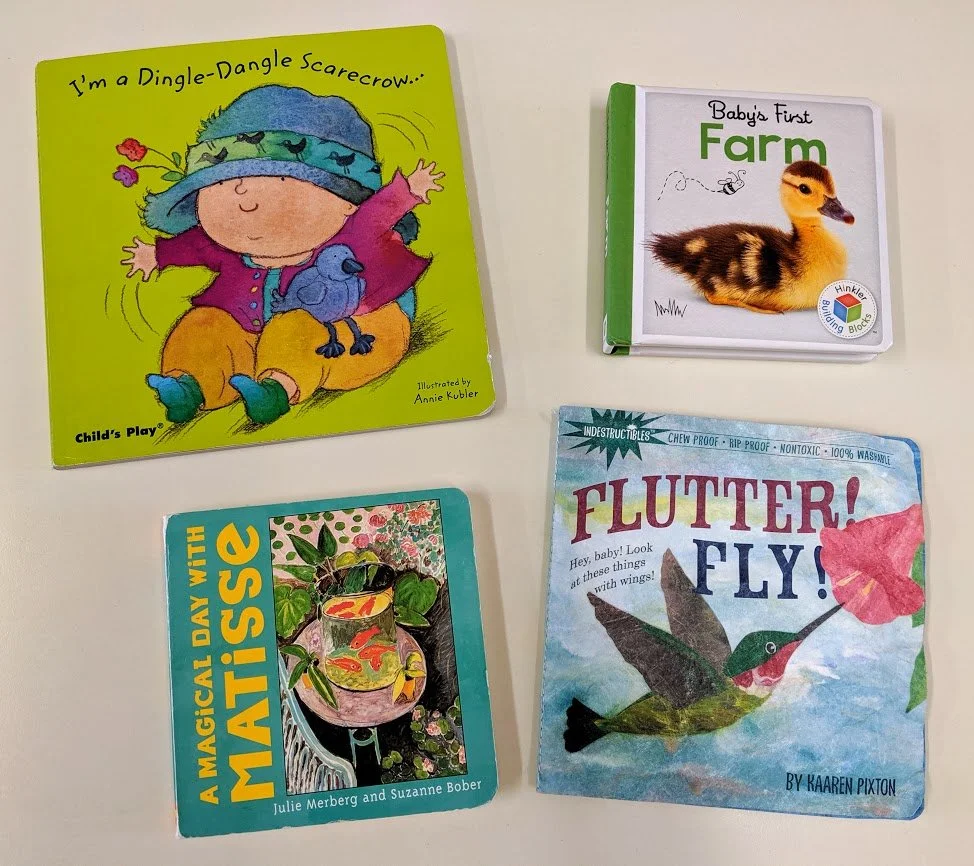
Look for books with “real” illustrations and at this stage try to avoid fantasy.
Read side by side and take advantage of lovely resources such as the libraries baby reading sessions (Thursdays mornings in Toronto)
THIS WEEK: Removing Obstacles
Physical Obstacles
Think clothing, gates, “containers”, dummies, swaddles, flooring.
Heavy materials such as denim can restrict movement and waistbands with buttons can often be uncomfortable. Babygrows with feet can soon become restricting as their legs grow quicker than their bodies (you can always just cut the foot of the babygrow)
Gates are vital for safety but be mindful of putting them where they aren't truly necessary and in the back of your minds know if you have stairs you are going to have to teach your little one early. Demonstrate backward crawling first and once upright always get them to have one hand on the wall and the other in the adults hand.
Whenever possible allow your child the freedom to move and put them on the floor. Bouncy chairs, high chairs and carriers are great but remember for short times only.
Use dummies as you need them but start thinking about the why and trying without. Remember daytime is always a better time to try changes, not at night time.
Swaddling is another example of when we can forget to change up, loosen the swaddle and see what works for your little one.
Once they start crawling, rugs and blankets can be a hindrance so floor or non-slip mats are the way to go. Don’t forget the grass as an option too.
Psychological Obstacles
Not talking or equally talking too much may be who we are and might need us to adjust for our child
“The adult knows best”. Often our children do communicate their needs but we don't always choose to listen.
Would I behave this way to another person? The example we discussed today was around moving our children without warning but it might also include wiping their mouth in the middle of feeding, trying to get them to finish what is in the bowl when they indicate they have had enough.
I’m sure there are other things you can think of or perhaps not and this is now a chance to look on with different eyes.
Recipe: Healthy chocolate chickpea truffles
Ingredients;
150g chickpeas, 120g dates, 1 1/2tbsp cocoa powder, 1 1/2tbsp peanut butter, pinch of salt, 1 1/2tbsp maple syrup
Method:
Soak dates in hot water for 5 mins to softened
In a food processor blend the chickpeas, dates, cocoa powder, peanut butter, salt and maple syrup until smooth.
Chill mixture in the fridge
Roll into balls and cover in chopped nuts or coconut
Store in the fridge
RESOURCES:
What I forgot to mention today was about using signing with some simple options to help with the frustration that often arises before little ones can actually articulate their needs. These two links hopefully expand on it.
https://www.youtube.com/watch?v=v7Wd8U1HdDY
These are the songs to print out if you choose to;
This is an article about dummies;
https://1drv.ms/b/c/72c1765a53eb9707/IQAHl-tTWnbBIIByQycAAAAAAexyiqjJteU2a735CMziwEI?e=sS2LId
This is the company that make the indestructible books;
This week’s circle was guided by:
Sarah Breckenridge, Montessori 0–3 Guide
